
There’s something magical about holiday-only foods. They disappear for most of the year, then suddenly show up like celebrity guests, act superior for six weeks, and vanish again before you can get bored of them. We accept this arrangement because of tradition, nostalgia, and the collective agreement that certain foods must suffer a dramatic entrance and exit.
Want to Save This Recipe?
Enter your email & I'll send it to your inbox. Plus, get great new recipes from me every week!
By submitting this form, you consent to receive emails from Blue's Best Life.
Still, every year, the same thought creeps in between bites: Why don’t we eat this all the time? These foods aren’t fragile. They’re not rare. The calendar just gatekeeps them. Here are the holiday foods we treat like limited editions but absolutely shouldn’t.
Stuffing

Stuffing spends eleven months hiding, then shows up at Thanksgiving acting like it runs the table. Suddenly, everyone’s an expert, debating bread types, sausage vs. no sausage, and whether it’s acceptable to call it “dressing.” It’s savory, cozy, and somehow better when eaten directly from a disposable aluminum pan. Stuffing absorbs gravy like it was born for it, yet we pretend it can’t exist outside of November.
Meanwhile, it’s basically seasoned bread with personality. People eat croutons year-round with zero guilt, but stuffing gets locked behind a holiday velvet rope. If stuffing showed up at a random Tuesday dinner, no one would complain. They’d just quietly take seconds and wonder why society made this so complicated.
Eggnog
Eggnog gets one shot a year to shine, and it absolutely knows it. Thick, creamy, aggressively festive, and unapologetically rich, it arrives in grocery stores like a dairy-based dare. Some people claim they don’t like it, yet somehow still pour a glass “just to try it again.” Eggnog is basically a dessert pretending to be a beverage, which explains why it’s only socially acceptable when lights are twinkling and someone’s wearing a novelty sweater.
Outside of December, ordering eggnog would feel rebellious, like listening to Christmas music in July. But deep down, we all know eggnog would crush as a year-round treat if it wasn’t wrapped in so much holiday drama.
Honey-Baked Ham
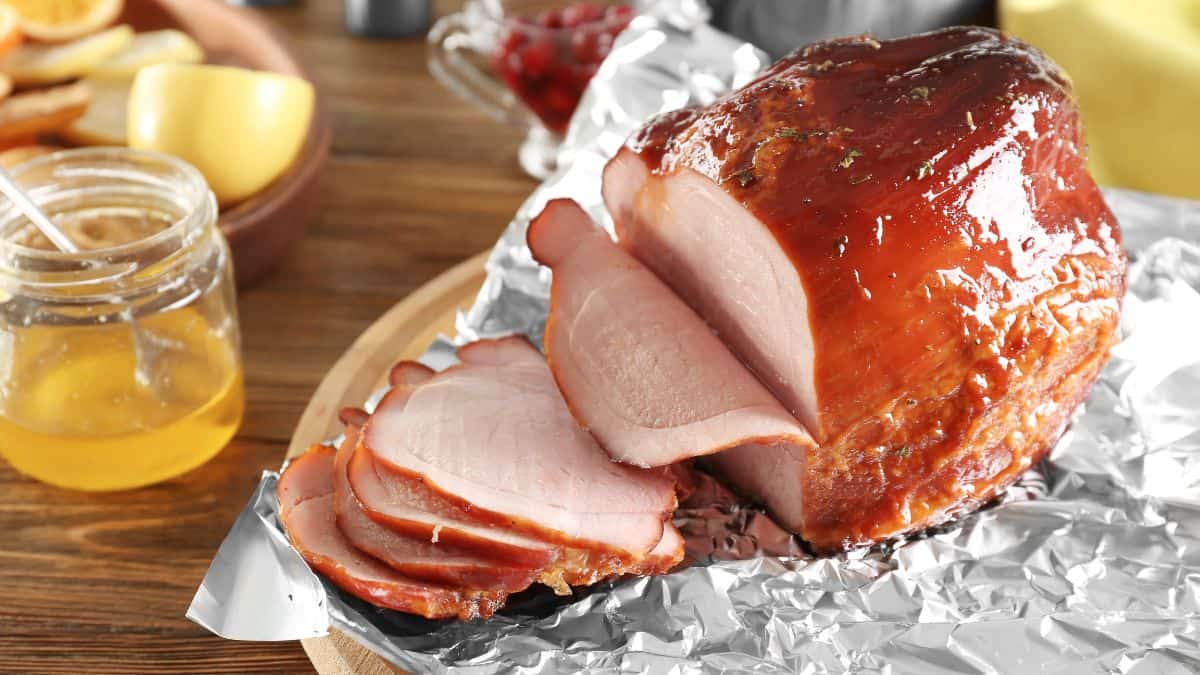
Honey-baked ham shows up for holidays already sliced, glazed, and ready to steal the spotlight. It’s sweet, salty, and suspiciously better than any ham you make yourself. Everyone suddenly becomes polite at dinner, carefully carving thin slices like it’s a museum artifact. Leftovers are guarded like treasure, rationed into sandwiches that somehow taste better the next day. Then the holidays end, and ham goes back to being an occasional deli option with none of the same excitement.
There’s no logical reason honey-baked ham only gets invited to special occasions. It’s delicious, low-effort, and universally liked. Yet we treat it like it needs a formal invitation and a centerpiece moment.
Peppermint Bark
Peppermint bark is chaos in the best way. Chocolate, candy cane shards, and pure seasonal confidence smashed together into something that feels both fancy and slightly unhinged. It shows up in tins, gift bags, and office break rooms, daring you to take “just one more piece.” The crunch is loud, the peppermint is aggressive, and somehow it still works.
Peppermint bark disappears the moment January hits, as if the flavor itself expires. We’re suddenly expected to act like peppermint and chocolate can’t coexist outside of winter. It’s unfair. Peppermint bark doesn’t need snow to be enjoyable. It just needs permission to exist without seasonal judgment.
Green Bean Casserole

Green bean casserole spends most of the year being ignored by people who claim they don’t like vegetables. Then Thanksgiving arrives, and suddenly it’s essential. Creamy, crunchy, and held together by fried onions that somehow count as a topping, it defies logic and nutrition labels.
People who haven’t touched a green bean since childhood suddenly defend this dish like it’s a family heirloom. The casserole dish comes out, everyone nods approvingly, and no one questions why this only happens once a year. It’s comfort food pretending to be a side. If green bean casserole showed up at a random potluck in March, it would still disappear just as fast.
Gingerbread Anything
Gingerbread only gets a few weeks to shine before being packed away with the ornaments. Cookies, houses, lattes, loaf cakes, it doesn’t matter. Gingerbread shows up loud, spiced, and confident, then vanishes without explanation. The flavor is warm, nostalgic, and somehow both cozy and bold.
Yet we act like cinnamon, ginger, and molasses are too festive for everyday life. No one questions pumpkin spice lingering into November, but gingerbread gets cut off immediately after the holidays. That feels personal. Gingerbread doesn’t need a theme or a countdown. It just needs someone brave enough to serve it in April and refuse to apologize.
Deviled Eggs

Deviled eggs appear during holidays like a surprise hit song. Someone brings them out, everyone pretends they’re shocked, and then they’re gone in minutes. They’re simple, messy, and wildly addictive. There’s always someone hovering near the tray, casually checking how many are left.
Yet deviled eggs are rarely invited to regular meals, as if they’re too powerful for everyday life. They require zero seasonal ingredients and minimal effort, yet we only trust them during big gatherings. If deviled eggs showed up more often, they’d still be loved. We’d just stop acting surprised by how fast they disappear.
Holiday foods aren’t rare. They’re just dramatic. We’ve collectively decided certain flavors deserve a limited run, even though they’d thrive year-round with zero complaints. Maybe that’s part of the magic, or maybe we’re just afraid of admitting that stuffing on a random Tuesday sounds perfect. Either way, these foods aren’t seasonal because they need to be. They’re seasonal because we said so, and honestly, that feels like a rule worth breaking.
Leave a Reply